Uncategorized

SEO vs. SEM: Which Strategy Will Actually Move the Needle for You?

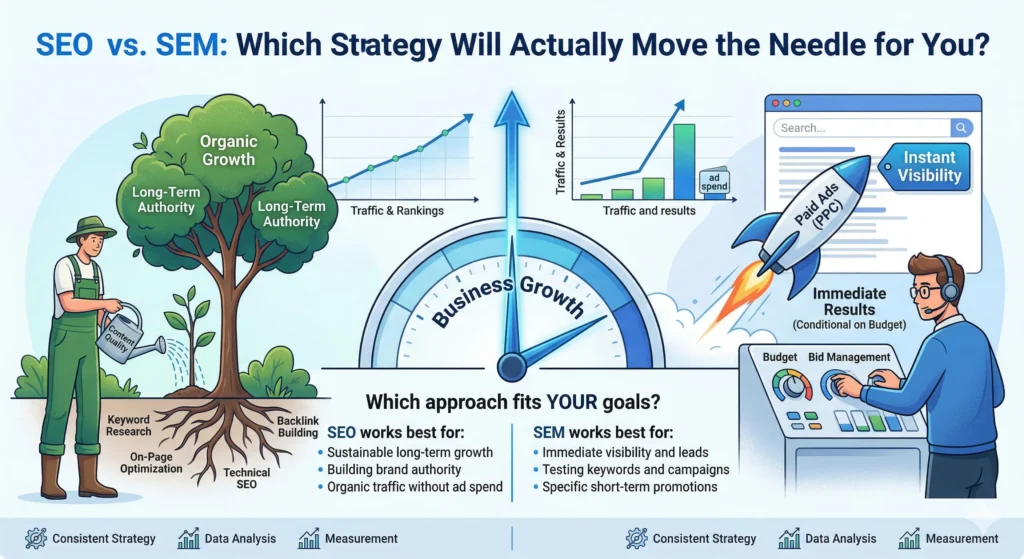
In the contemporary theater of digital commerce, businesses face a pivotal strategic crossroad: how to effectively allocate their marketing budget to ensure maximum visibility. The debate between Search Engine Optimization (SEO) and Search Engine Marketing (SEM) is not merely a technical discussion but a fundamental business decision that dictates the trajectory of a brand’s growth. While both strategies aim to capture the attention of users on search engine results pages (SERPs), they operate on vastly different timelines, cost structures, and psychological triggers. The Anatomy of the Search Page: Defining the Territory To comprehend the strategic value of each method, one must first identify the physical and digital boundaries they occupy. SEO focuses on the “organic” listings, where search engines like Google rank websites based on relevance, technical health, and authority. This process requires a meticulous commitment to content quality and backend optimization, aiming to earn a spot at the top of the page without paying for individual clicks. It is a merit-based system that rewards the most helpful and technically sound players in the digital space. Conversely, SEM—often referred to as Pay-Per-Click (PPC)—involves buying prime real estate at the very top and bottom of the search results. These “sponsored” listings allow businesses to bypass the lengthy organic queue by paying a fee every time a user clicks their link. While SEO builds a long-term Online Brand Identity, SEM provides an immediate bridge between a customer’s query and a company’s solution. Recognizing where your brand currently sits in its lifecycle is the first step in determining which of these territories you should prioritize. Speed vs. Sustainability: The Temporal Trade-off One of the most significant distinctions between these strategies lies in the speed of results. SEM acts as a high-octane fuel for your lead generation engine; the moment you launch a campaign and set your budget, your brand appears before potential customers. This makes SEM an indispensable tool for new product launches, seasonal promotions, or businesses needing to generate immediate cash flow. However, the moment the budget is exhausted, the visibility vanishes, creating a total dependency on continuous spending. SEO, in stark contrast, is a marathon that requires patience and persistence. It can take months of consistent effort to see a significant shift in organic rankings, as search engines must “crawl” and “index” your improvements to verify your authority. Yet, the sustainability of SEO is unparalleled. Once you achieve a high-ranking position for a valuable keyword, that traffic becomes “free” and continues to flow even if you pause your marketing efforts temporarily. It builds a foundation that grows stronger and more cost-effective over time. Financial Dynamics: Managing the Cost of Acquisition The financial models of SEO and SEM require distinct approaches to capital management. When utilizing SEM, you maintain granular control over your spending, allowing you to set daily limits and bid specifically on high-value terms. This provides a clear, immediate view of your Customer Acquisition Cost (CAC). However, in highly competitive industries, the “cost-per-click” can escalate quickly, potentially eroding profit margins if your conversion rate is not optimized. SEO requires an upfront investment in human capital—writers, developers, and strategists—rather than a direct payment to Google. While the initial costs may seem high with no immediate return, the long-term Return on Investment (ROI) of organic search is often significantly higher than paid search. By investing in Digital Marketing Services that focus on organic growth, you are essentially purchasing an asset that appreciates in value, whereas SEM is more akin to “renting” space that never truly belongs to you. The Trust Factor: Why Organic Wins the Credibility Race User behavior reveals a fascinating psychological divide between how people perceive organic versus paid results. Many savvy internet users intentionally skip past the “sponsored” section, viewing paid ads with a degree of skepticism. They perceive organic results as more trustworthy because these sites have “earned” their position through quality and relevance. A high organic ranking serves as a silent endorsement from the search engine, significantly bolstering your Online Brand Identity. This trust is vital for B2B services and high-ticket items where the buyer’s journey is longer and more complex. If a potential client finds your brand through an insightful, high-ranking blog post rather than a disruptive ad, the relationship begins on a foundation of value rather than a sales pitch. While SEM can get you the “click,” SEO often does the heavy lifting in converting that click into a loyal, trusting client who views your brand as a legitimate industry authority. Targeted Precision: The Surgical Accuracy of SEM While SEO casts a wide net based on intent, SEM offers surgical precision through advanced targeting features. Through sophisticated Social Media Management and search platform tools, marketers can target users based on their geographic location, the time of day, the device they are using, and even their past browsing history. This level of control ensures that your budget is only spent on users who fit your ideal customer profile, minimizing “waste” in your marketing spend. Furthermore, SEM allows for “A/B testing” on a scale that SEO cannot match. You can run two different versions of an ad simultaneously to see which headline or call-to-action resonates more with your audience. These real-time insights can then be used to inform your broader brand strategy. In the hands of a skilled marketer, SEM is not just a traffic generator; it is a powerful research tool that provides immediate feedback on what your market actually wants. The Content Connection: Fueling the SEO Machine SEO is fundamentally driven by the quality of your content. To rank well, you must provide comprehensive answers to the questions your audience is asking. This necessitates a deep dive into keyword research and the creation of “evergreen” assets that provide value for years. This process does not just improve your search rankings; it populates your entire marketing ecosystem with high-quality material that can be repurposed for newsletters, whitepapers, and social platforms. A robust content strategy also improves the performance of your SEM campaigns. When a user
Digital marketing expert123
Uncategorized

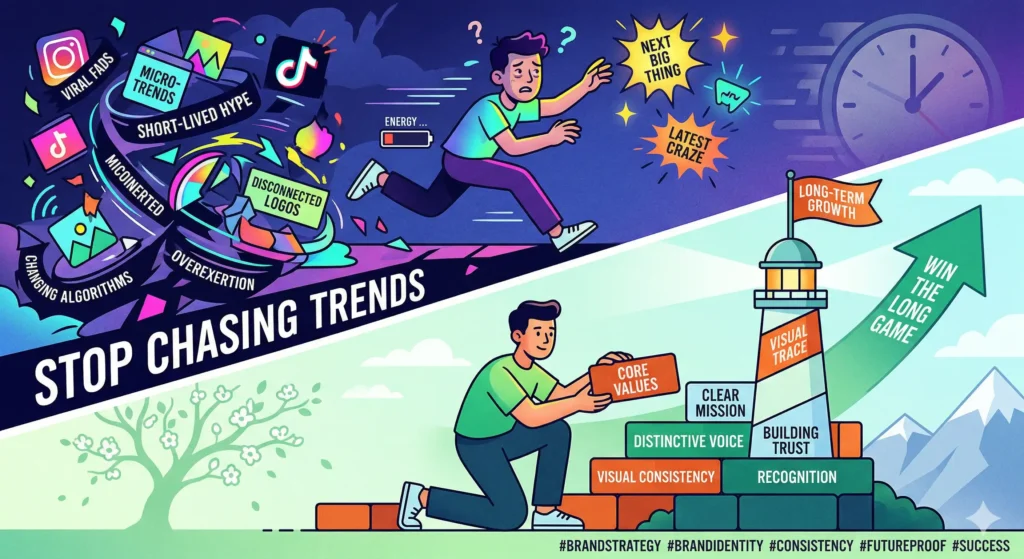
Stop Chasing Trends: Why a Consistent Brand Identity Wins the Long Game

In the hyper-accelerated landscape of modern digital commerce, businesses often find themselves ensnared in a relentless cycle of “trend-chasing.” This reactive behavior stems from a fear of obsolescence, yet it frequently leads to a fragmented and unrecognizable brand presence. While the allure of the latest viral aesthetic or platform-specific gimmick offers a temporary spike in visibility,Digital marketing expert it rarely fosters the deep-seated trust required for long-term sustainability. True market leaders understand that a consistent brand identity serves as the bedrock of enterprise, providing a stable North Star in an otherwise chaotic marketplace. The Mirage of Modern Trends: Identifying the Trap Market trends operate much like a siren’s song, promising rapid growth and instant relevance to those who follow their call. However, these trends are inherently transitory; they disappear as quickly as they emerge, leaving behind brands that look like patchwork quilts of disconnected ideas. If your visual language and messaging change every time a new design trend surfaces, your audience will struggle to form a cohesive mental image of who you are. This lack of clarity creates cognitive friction, making it significantly harder for potential leads to choose your services over a more stable competitor. Furthermore, trend-chasing often results in a “race to the bottom” where brands lose their unique value propositions in an attempt to mimic what is currently popular. When everyone adopts the same neon gradients or “edgy” social media tone, individual brand voices become muffled in a sea of sameness. To truly stand out, a brand must possess the courage to remain distinct. Authenticity cannot be manufactured through the adoption of a trend; it must be cultivated through a rigorous commitment to an established Online Brand Identity that transcends seasonal fads. The Psychology of Recognition: Building the Mental Shortcut Human psychology favors the familiar. In a world of infinite choices, the brain seeks shortcuts to minimize the effort of decision-making. A consistent brand identity—encompassing everything from color palettes and typography to tone of voice—functions as this psychological shortcut. When a client sees your content, they should immediately recognize your brand before they even read the headline. This instant recognition is the result of repeated exposure to a stable set of brand markers, which eventually encodes your business into the consumer’s long-term memory. Consistency does more than just aid memory; it builds a sense of safety. When a brand remains predictable in its presentation and values, it reduces the perceived risk for the buyer. In the realm of Digital Marketing Services, where clients often invest significant capital into intangible strategies, the “safety” of a consistent brand can be the deciding factor in a conversion. If your brand is a chameleon, constantly shifting its skin, you inadvertently signal that your internal processes and quality of work might be just as inconsistent. Trust as Currency: How Consistency Becomes Credibility In the digital economy, trust is the most valuable currency a freelancer or agency can possess. You cannot demand trust; you must earn it through a series of consistent interactions over time. Every touchpoint—whether it is a LinkedIn post, an email newsletter, or a formal proposal—serves as a promise to your audience. When these touchpoints align perfectly with your established brand identity, you fulfill that promise. Conversely, a sudden shift in style or message breaks that promise, creating a “trust deficit” that is incredibly difficult to repair. Long-term clients are looking for partners, not just vendors. They want to know that the professional they hire today will be the same reliable expert six months from now. By resisting the urge to pivot with every market whim, you demonstrate a level of professional discipline that is highly attractive to high-ticket clients. Your Online Brand Identity becomes a testament to your integrity. It shows that you have a clear vision and the fortitude to stick to it, which are precisely the qualities businesses look for when outsourcing their marketing efforts. The High Cost of the Pivot: Why Constant Change Drains Resources Many businesses underestimate the operational and financial toll of constant rebranding or trend-chasing. Every time you “pivot” to align with a new trend, you incur significant costs in time, creative energy, and capital. You must update your website, redesign your social media templates, rewrite your brand guidelines, and retrain your team or yourself to speak in a new voice. For a freelance digital marketer, these are non-billable hours that could have been spent on revenue-generating activities or deepening client relationships. Moreover, frequent changes dilute the “brand equity” you have already built. SEO value, social media engagement, and word-of-mouth referrals all rely on a stable identity. If you change your messaging too often, you confuse the algorithms and your advocates alike. Instead of building a towering skyscraper of influence, you end up with twenty half-finished foundations. Investing in a robust, timeless identity from the start allows you to direct your resources toward Social Media Management and growth strategies that actually scale, rather than constantly fixing a fractured image. Strategic Social Media Management: Beyond the Viral Loop In the context of Social Media Management, consistency is often misinterpreted as “posting every day.” While frequency matters, the consistency of the message is far more vital. A brand that posts high-quality, on-brand content three times a week will always outperform a brand that posts five times a week with a disjointed mix of trending memes and off-brand commentary. Your social media profiles should act as a curated gallery of your expertise, reflecting a singular vision that resonates with your specific target audience. Effective social media strategies utilize “flexible consistency.” This means you can acknowledge current events or utilize new platform features, but you do so through the lens of your established brand persona. You adapt the medium, but never the message. By maintaining this discipline, you transform your social media followers into a loyal community. They follow you because they know what to expect, and they stay because you consistently deliver on that expectation without the distraction of irrelevant trends. The Competitive Edge: Standing

best digital marketing agencies123
Uncategorized

Why Email Marketing is Still the Most Profitable Channel in 2026.

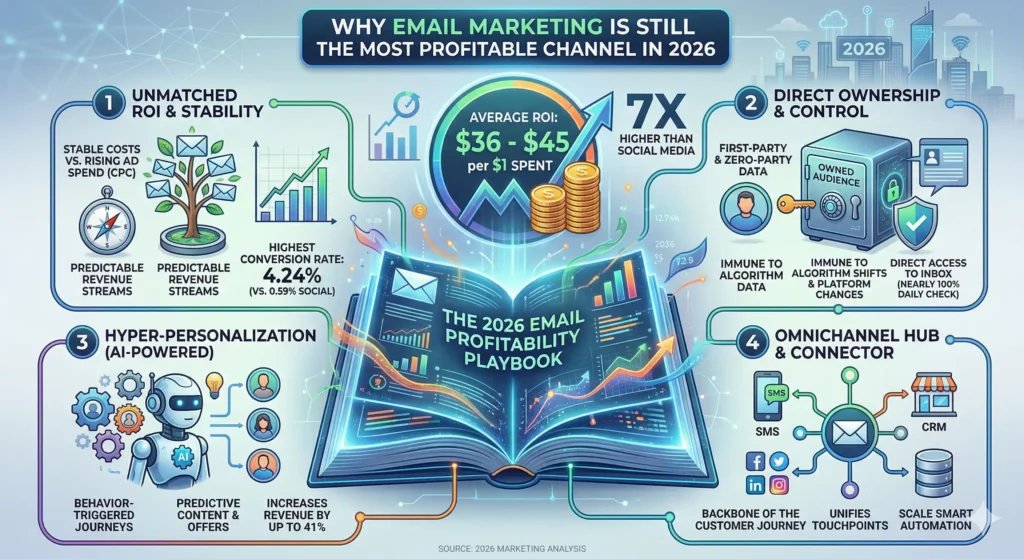
In an era defined by volatile social algorithms and the meteoric rise of generative AI, one might expect the humble email to have faded into obsolescence. However, quite the opposite has occurred. As we navigate the complex digital landscape of 2026, email marketing has solidified its position not merely as a surviving channel, but as the central nervous system of any high-yield digital strategy.best digital marketing agencies While other platforms struggle with fluctuating organic reach and rising acquisition costs, email remains the most resilient and profitable medium available to modern businesses. The Sovereignty of the Inbox: Owning Your Audience in a Platform-Dependent World The most significant shift in the 2026 marketing ecosystem is the realization that “rented” audiences on social media are inherently unstable. A sudden algorithm update or a change in platform leadership can instantly sever a brand’s connection with its followers. In contrast, email marketing offers platform independence, providing a stable foundation that remains immune to the volatility of external tech giants. This ownership allows businesses to cultivate long-term relationships without paying a “reach tax” to speak to their own customers. Furthermore, the data collected through email interactions serves as a fortress of first-party intelligence. When a subscriber engages with your newsletter, they provide behavioral signals that belong exclusively to your organization. By leveraging this data, you can build deep profiles that inform not only your email strategy but your entire product development and sales approach. In a world where third-party data has become scarce and unreliable, the “owned” audience of an email list is the most valuable currency a marketer can possess. The AI Revolution: Transforming Static Lists into Predictive Relationship Engines Artificial intelligence has fundamentally reimagined what is possible within the inbox, moving far beyond basic automation into the realm of “predictive empathy.” In 2026, sophisticated email systems no longer wait for a user to take an action; they anticipate the user’s needs based on massive datasets. By integrating AI-driven predictive analytics, brands can now deliver the right message at the exact moment of highest receptivity, ensuring that every touchpoint feels instinctive rather than intrusive. Moreover, generative AI has eliminated the burden of manual content production while simultaneously increasing relevance. Modern platforms use dynamic content blocks that adapt in real-time to the recipient’s current context—be it their location, recent browsing history, or even their predicted emotional state. This transition from “batch and blast” to hyper-personalized, one-to-one communication has resulted in a 40% increase in revenue for AI-powered campaigns compared to traditional methods. The ROI Heavyweight: Analyzing the Math Behind the 4,200% Return The financial argument for email marketing in 2026 remains undisputed. While the cost of customer acquisition through paid social channels has spiked by over 30% in recent years, the operational costs of email remain remarkably stable. Because the infrastructure is scalable and the audience is pre-qualified, the efficiency of this channel is unmatched. Every dollar spent on email goes directly toward nurturing an existing lead rather than gambling on the attention of a cold stranger. Additionally, email boasts conversion rates that are consistently 7x higher than those of social media platforms. This disparity exists because an email inbox is a destination for intent. When a user opens an email, they are in a “processing” mindset, whereas social media consumption is often passive or entertainment-driven. By meeting customers in a focused environment, brands can drive high-value actions—such as purchases, webinar sign-ups, or consultations—with far greater precision and lower friction. The Omnichannel Anchor: Centralizing the Modern Customer Journey In 2026, the customer journey is rarely linear, often spanning across VR showrooms, social discovery engines, and physical retail spaces. Email serves as the essential “connective tissue” that unifies these disparate touchpoints. By acting as the central hub for zero-party data—information that customers intentionally share—email allows brands to maintain a consistent narrative across every channel the consumer visits. Furthermore, email marketing facilitates the seamless transition from discovery to retention. When a lead is captured via a social media contest or a website interactive tool, the email sequence takes over the heavy lifting of lead qualification and nurturing. This synergy ensures that no prospect falls through the cracks, effectively lengthening the customer lifetime value (CLV) by maintaining a persistent, value-driven presence in the customer’s life long after the initial transaction. The Trust Dividend: Navigating Privacy with Permission-Based Marketing As global privacy regulations like the GDPR and updated state-level mandates in the US become more stringent, the “opt-in” nature of email marketing provides a significant legal and ethical advantage. Email is inherently a permission-based medium; the recipient has explicitly invited the brand into their digital home. This foundation of consent builds a level of trust that “interruption marketing” can never achieve, turning privacy compliance into a competitive asset. Moreover, the transparency afforded by modern email preference centers empowers users to control the frequency and nature of the content they receive. This shift toward “radical transparency” reduces unsubscribe rates and increases brand affinity. In an age where consumers are increasingly wary of how their data is used, a well-managed email program serves as a beacon of reliability and respect for personal boundaries. The Interactive Inbox: Turning Emails into Micro-Websites The technical capabilities of email have evolved dramatically with the widespread adoption of AMP (Accelerated Mobile Pages) for Email. In 2026, an email is no longer a static message; it is a fully functional, interactive experience. Subscribers can now browse product catalogs, fill out complex surveys, and even complete a checkout process without ever leaving their inbox. This reduction in “click friction” has revolutionized conversion optimization. By removing the need for a redirect to an external website, interactive emails significantly lower the bounce rate during the transition from interest to action. Whether it is a “spin-the-wheel” gamified reward or a real-time calendar widget for booking appointments, these tools provide immediate utility. This capability ensures that email remains the most convenient channel for the modern, time-starved consumer. The Death of Vanity Metrics: Measuring Real Business Impact We have moved past the era

Uncategorized

Agency vs. Freelancer: Why Small Businesses are Swapping Big Firms for Specialised Experts

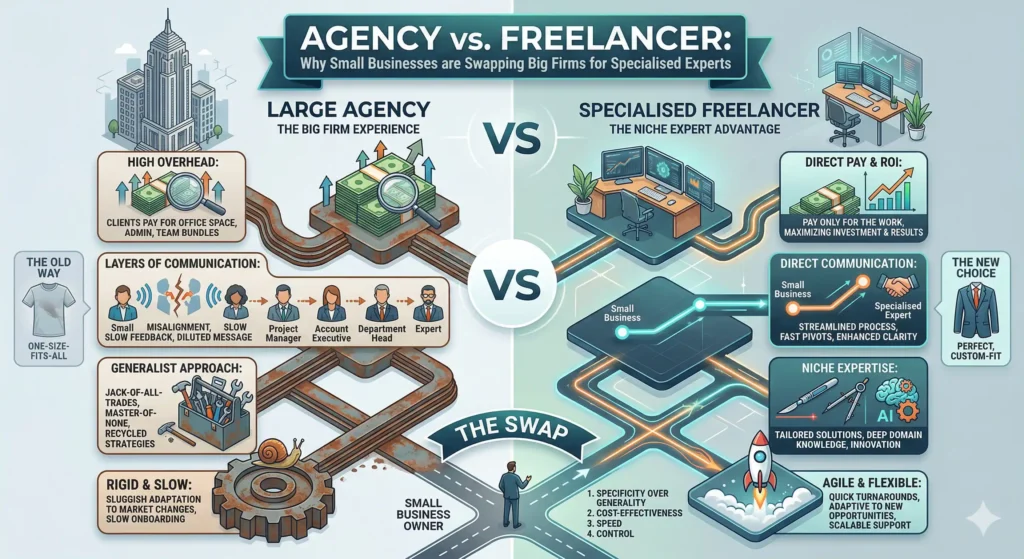
The traditional marketing landscape is undergoing a tectonic shift. For decades, the “Big Agency” model stood as the undisputed gold standard for business growth. However, as we navigate the complexities of 2026, a new narrative has emerged. Small businesses and mid-market firms are increasingly divesting from high-overhead agencies in favor of specialized expertise.”Stop paying for agency overhead. Discover why the best digital marketing companies are being replaced by specialized experts. Learn how direct communication and radical agility can transform your small business growth in 2026.” This transition reflects a broader demand for agility, transparency, and direct accountability in a digital economy that moves at the speed of light. The Overhead Illusion: Deconstructing the Agency Fee Structure When a small business signs a contract with a prestigious agency, they often believe they are paying for a powerhouse of collective talent. In reality, a significant portion of that investment sustains the agency’s internal infrastructure rather than the client’s campaign. High-rise office rents, executive salaries, and extensive administrative departments necessitate high retainers. Consequently, the actual “work” performed on the account often accounts for only a fraction of the total invoice. Furthermore, big firms frequently assign junior-level staff to manage small business accounts while the senior partners focus on “whale” clients. This creates a disconnect where the business pays premium prices for entry-level execution. In contrast, when you hire freelance digital marketing services, you eliminate the middleman. Every dollar spent goes directly toward the expertise of the individual performing the work, ensuring that the financial investment aligns perfectly with the creative output. Agility as a Competitive Advantage: Moving at the Speed of Social In the 2026 digital ecosystem, trends emerge and vanish within 48-hour cycles. Large agencies, burdened by rigid hierarchies and lengthy approval processes, often struggle to pivot quickly. By the time a campaign idea passes through the account manager, the creative director, and the compliance team, the cultural moment has likely passed. This structural inertia can be a death sentence for small businesses trying to remain relevant on fast-paced platforms like TikTok or decentralized social networks. Conversely, specialized freelancers thrive on speed. Because they operate as a single point of contact, they can iterate on strategies in real-time. If a specific ad creative is underperforming, a freelance digital marketing expert can identify the issue and deploy a fix within hours. This radical agility allows small businesses to outmaneuver larger competitors who remain tethered to quarterly planning cycles and bureaucratic bottlenecks. The Specialization Surge: Why Generalists are Falling Behind The “Full-Service Agency” model often promises to be a jack-of-all-trades, offering everything from SEO and PPC to public relations and web design. While this sounds convenient, it frequently leads to a “mile wide and an inch deep” level of expertise. In 2026, the technical requirements for success in specific niches—such as Generative Engine Optimization (GEO) or privacy-compliant data tracking—are too complex for a generalist team to master simultaneously. Businesses are now realizing that a specialist who spends 100% of their time mastering a single discipline is far more valuable than an agency staffer juggling ten different service lines. Whether it is deep-funnel email automation or high-fidelity video production, specialized experts provide a level of nuance that generalist firms cannot replicate. This shift toward “micro-expertise” ensures that each pillar of a company’s marketing strategy is handled by a true authority in that specific field. Direct Lines of Communication: Ending the Game of “Account Manager Telephone” One of the most pervasive frustrations in the agency model is the presence of the Account Manager. While intended to be a bridge, this role often functions as a barrier to clear communication. When a business owner has a technical question about their SEO strategy, they must relay it to the manager, who then consults the specialist, only to return with a simplified (and often misinterpreted) answer. This “game of telephone” leads to wasted time and misaligned expectations. By contrast, working with an expert freelancer establishes a direct line to the “doer.” This unmediated access fosters a deeper partnership and ensures that the business’s vision is never lost in translation. Direct communication allows for more profound strategic discussions, as the person executing the work is the same person explaining the data. Consequently, the relationship shifts from a cold vendor-client dynamic to a collaborative partnership built on mutual understanding.

Best Seo expert 12
Uncategorized

The Great Digital Divide: Architecting Your Marketing Future in 2026

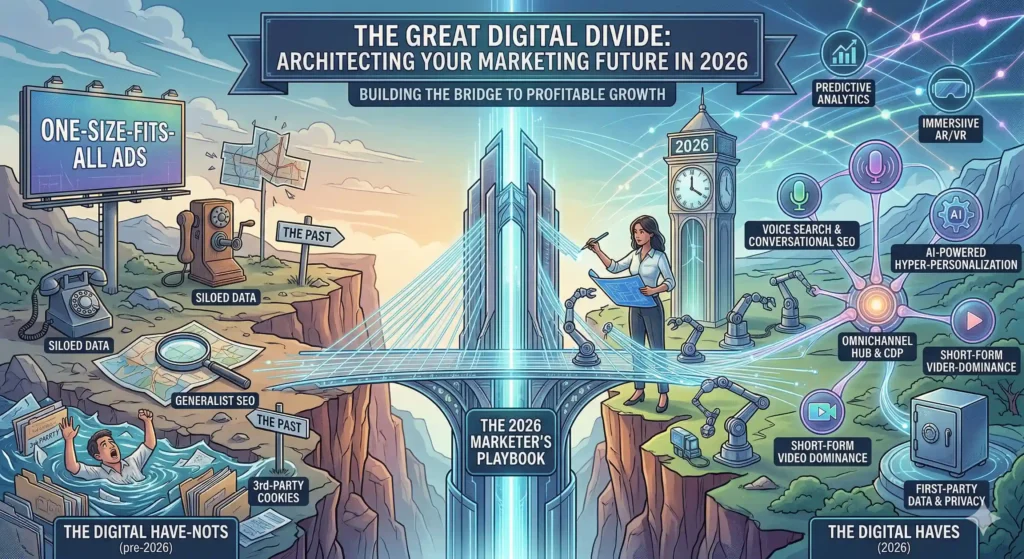
In the rapidly evolving commerce landscape of 2026, the traditional boundaries of business growth are no longer defined by geographic reach, but by digital visibility and strategic execution. As enterprises navigate a marketplace saturated with AI-driven content and hyper-personalized consumer expectations, the methodology behind marketing execution becomes a critical pivot point for success. Seo expert The fundamental question facing modern executives is no longer whether to outsource, but rather which structural model—an agency or a freelancer—aligns with their long-term corporate objectives. The Blueprint of Sovereignty: Establishing First-Party Data Dominance As third-party cookies have effectively vanished from the digital ecosystem, the collection of first-party data has evolved from a best practice into a survival imperative. Organizations must now treat their data architecture as a proprietary asset that shields them from the volatility of external platforms. By prioritizing direct relationships with the audience, brands secure the insights necessary to drive high-level strategy without relying on the permission of tech giants. Transitioning to this model requires a sophisticated value exchange where users willingly trade information for genuine utility. Whether through gated expert content, loyalty programs, or interactive tools, the goal remains the focus on building a robust Customer Relationship Management (CRM) foundation. When you own the data, you own the relationship, ensuring that your marketing efforts remain effective even as privacy regulations tighten globally. The Intelligence Engine: Integrating AI as a Strategic Partner In 2026, artificial intelligence functions as the central nervous system of every high-performing marketing department. We have moved past the novelty of simple text generation into the era of “Agentic Marketing,” where AI models autonomously optimize ad spend, predict churn, and personalize content at a scale once deemed impossible. Professionals who embrace these tools do not replace their creativity; rather, they augment their strategic reach and operational speed Furthermore, the integration of AI allows for the transition from reactive to predictive marketing. Instead of analyzing what occurred last quarter, modern systems identify emerging patterns in real-time, allowing brands to intercept customer needs before the customer even articulates them. This shift demands that marketers pivot from manual execution to “strategic oversight,” focusing on brand positioning and ethical guardrails while the intelligence engine handles the heavy lifting of data processing. Beyond the Search Bar: Mastering Generative Engine Optimization (GEO) Traditional Search Engine Optimization (SEO) has undergone a fundamental metamorphosis into Generative Engine Optimization (GEO). Users now frequently bypass the standard list of blue links in favor of direct, AI-synthesized answers from platforms like SearchGPT, Gemini, and Perplexity. Consequently, the objective of content creation is no longer just “ranking” but becoming the primary cited source for these generative models. To achieve this, architects of the digital future must focus on “Experience, Expertise, Authoritativeness, and Trustworthiness” (E-E-A-T). AI engines prioritize content that demonstrates real-world application and verifiable authorship. By structuring data through schema markup and creating “entity-rich” content, you ensure that your brand remains visible within the AI overviews that now dominate the top of the search results. The Segment of One: Implementing Hyper-Personalization at Scale The era of broad demographic targeting has officially ended, replaced by the “segment of one.” Hyper-personalization in 2026 utilizes real-time behavioral signals—such as browsing speed, current location, and even local weather—to deliver a unique experience for every individual user. This level of precision removes the friction of “choice paralysis,” presenting the consumer with exactly what they require at the moment of highest intent. Moreover, achieving this requires a unified data platform that eliminates silos between sales, marketing, and customer support. When your email marketing system “talks” to your retail point-of-sale and your AI chatbot, you create a seamless “omnichannel memory.” This ensures that a customer never has to repeat their preferences, fostering a sense of brand intimacy that drives long-term loyalty and significantly higher conversion rates.

Scroll to Top